














Casinova Mobile E Casinova App In Italy

In 2026, the smartphone version of Casinova in Italy will focus on fast access, a clear account, and responsible use.

Fortune Gems 2 Slot

Table of Contents

  • The Dog House Megaways Slot
  • Lucky Joker 10 Extra Gifts Slot
  • Sword of Ares Slot
  • Floating Dragon Hold & Spin Slot
  • Leprechaun Riches Slot
  • Fruit Cocktail Slot
  • The Dog House Megaways Slot
  • Sword of Ares Slot
  • Fruit Million Slot
  • The Dog House Megaways Slot
  • Big Fisherman Slot
  • Big Fisherman Slot
  • Seven Books Unlimited Slot
  • Casinova Fortune Slot
  • Sword of Ares Slot
  • Floating Dragon Hold & Spin Slot
  • 9 Mad Hats Slot
  • Floating Dragon Hold & Spin Slot
  • Big Bass Splash Slot
App 1

Smartphone Access In Real Life

Using a gaming platform from your phone doesn't just mean reducing everything to a smaller screen. It changes how you log in, check your balance, choose a title, log out, and return later. In 2026, it matters a lot, because for many users, the phone is the primary device. If the mobile area is well-organized, every action makes sense. If, however, buttons, menus, and history are scattered, even a short session becomes messy.

Imagine a common situation. You're on a break, have ten minutes, open your profile, and want to understand three things immediately: if the account is okay, how long you want to stay, and where to start. Usually, practical players check this first. They look at the balance, see if there are any useful notifications, and only then enter the section they're really interested in. This initial order prevents aimless navigation between different screens.

Then there's a point many underestimate: continuity. If you log in from your smartphone in the morning and resume on your computer in the evening, you should find the structure, preferences, and information in the same place. It doesn't need to be surprising. It needs stability. The platform is available in Italy for adult users and should be used in compliance with applicable rules and personal limits, without turning mobile convenience into continuous, automatic access.
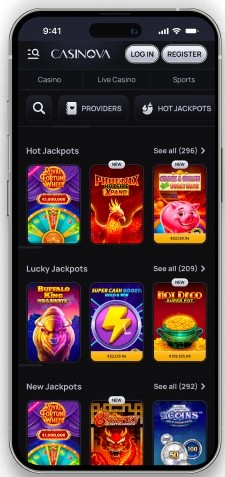

application 2

Registration, Profile, and First Login

The initial part decides more than you might think. Many believe registration is a formality and the real game starts immediately after, but on mobile, it's the opposite: if the first steps are done well, almost everything else flows more linearly. An organized profile reduces errors, limits subsequent corrections, and simplifies account management when it's time to top up, verify, or end a session.

Imagine a simple scenario. You're creating your account while doing other things, replying to messages, switching apps, going back. In this context, it's very easy to enter data inaccurately or skip a check. Therefore, it's best to treat registration as a separate action: a few minutes, full attention, no rush. Fields should be read, not just filled.

A good habit is to immediately check your password, phone number, email address, and account preferences. It's not a waste of time. It's the most concrete way to avoid friction in subsequent steps. When the profile is set up correctly from the start, the phone stops seeming like a limitation and becomes practical.

Verify Data and Device Before Playing

Before starting, it's wise to look at your account with the eyes of someone who wants to avoid problems, not just get in quickly. Name, contacts, login settings, notifications, and recent history deserve a complete check. On desktop, correcting is easy, but on a smartphone, every oversight costs more attention. For example, if you entered a contact detail inaccurately, you might only notice it at the least convenient moment.

Imagine you want to fix everything while you're out. You have variable network, sun on the screen, little time. In that case, the best method is to do fewer things, but do them well: check one block at a time, save, and reread. Usually, attentive users behave this way. They prepare their account at a quiet moment, verify the device they'll use most often, and only then start a real session.

Why Choose Casinova Casino App In 2026

In 2026, the point isn't just being able to access from your phone. That's normal now. The advantage lies in how the mobile experience adapts to the user's real rhythm. Those who play on smartphones don't want to study a complicated interface. They want to open, understand, act, and close without too much searching. Therefore, the quality of a mobile solution is measured by practical details: stable access, readable navigation, clear response times, easy-to-find personal area.

App 3

Imagine very concrete daily use. In the morning, you check your account in a few minutes; in the evening, you return for a more relaxed session. If everything is logically constructed, you don't have to relearn anything each time. You find the same paths, the same commands, the same order. This is what makes a solution useful in real life, not just "present" on the phone.

There's also another aspect. Many people alternate between the mobile browser and device installation depending on the context. At home, they prefer a more stable environment; when out, they focus on speed. A good experience should support both habits without creating discrepancies between the account, history, and personal settings.

Difference Between Browser and Installation on Phone

The difference isn't just the icon on the screen. Using the browser can be more immediate when you want to log in without taking up space or when you prefer not to install anything. Installation, on the other hand, can offer faster access and a constant presence on the device. Neither option is automatically better. Your way of using the phone matters.

Imagine two different users. The first plays only in short bursts and doesn't want to add more apps to the device. The second prefers to open everything with a tap and immediately find their account. Both can be right. The most useful choice is the one that simplifies your routine without making you lose control. If a solution leads you to log in too often just because it's always there, convenience risks turning into automatism.

How to Avoid Errors in Short Sessions

Short sessions seem the simplest, but they are actually where most mistakes are made. You log in in a hurry, tap too quickly, and exit without checking anything. To avoid this, you need a mini-routine: open the account, check the balance, choose only one section, decide when to exit. Imagine you have exactly five minutes before leaving home. In that case, discipline is worth more than speed. A short path, if organized, works better than a quick but confusing one.

Catalog, Filters, and Choice Pace

When access is simple, the next step is to understand how to choose without losing focus. On a phone, the catalog should be used with a different logic than on a computer. It's not advisable to open too many sections at once, nor to scroll endlessly just because everything is at your fingertips. A very practical sequence works better: category, filter, two or three options, decision. This reduces dead time and helps maintain session control.

Imagine a frequent scenario. You have a quarter of an hour free in the evening, open the lobby, and are faced with dozens of options. If you start jumping between categories without criteria, time runs out before you've even chosen. More organized players usually do the opposite. They start with the type of experience they're looking for, use minimal filters, and quickly decide whether to stay or switch.

Readability also matters here. Clear buttons, well-distributed information, and a quick return to the home screen help more than a huge catalog. In 2026, the value of the phone version lies not so much in quantity, but in the ability to help you find the right spot without unnecessary noise.

Useful Aspect

What's worth looking at

Why it makes a difference

Chosen category

Type of experience and estimated duration

Avoid opening random sections

Main filters

Favorites, new arrivals, game pace

Reduces search time

Readability

Texts, buttons, screen space

Limit touch errors

Return to home

Simple switching between areas

Keeps track of the path

Cronologia personale

Ultimi titoli usati e attività recente

Aiuta a riprendere senza confusione

Pagamenti, Prelievi E Verifica Del Conto

Financial matters should never be handled when you are in a hurry. Payments, identity verification, and withdrawal requests require attention, because on a small screen, even a minimal detail can be missed. The most useful way to proceed is linear: check your profile, look at your history, verify your chosen method, and only then confirm the transaction.

Imagine you have finished a session and want to settle your account immediately. If you open the payments section without first checking your personal details, you risk realizing too late that something is missing or that information is inconsistent. Usually, those who encounter less friction do the opposite. They observe first, then act. This difference weighs heavily on a phone.

What to Check Before a Deposit

Before topping up your account, it's advisable to pause and re-read the entire context. Not just the method, but also the current balance, the session's goal, and any personal limits already set. If you deposit without knowing how much you want to use, the convenience of the phone encourages you to do everything automatically. Instead, the deposit should only be made after a clear decision.

Imagine you are about to start an evening session. You have your phone in hand and the temptation to do everything in one go. This is precisely where a few seconds' pause is needed. The most disciplined players first look at the available amount, then decide how much to wager, and only then confirm. This simple order reduces errors and helps keep the account budget separate from daily expenses.

When to Prepare Documents

Documents should be prepared before they become urgent. This is the most useful rule, and also the one many ignore. If you wait until the moment you need to perform an important operation, any poorly legible file becomes an obstacle. It's better to take photos, check the quality, and verify the data in advance, when you are calm. Imagine a concrete scene: you are out, there is little light, the phone focuses poorly, and you want to send everything immediately. Under those conditions, it's easy to make mistakes. Preparing in advance means avoiding last-minute rushes.

Personal Limits, Breaks, and Conscious Use

Mobile convenience is an advantage only if it stays within clear boundaries. When the phone is always nearby, the platform seems always available, and precisely for this reason, it becomes necessary to decide in advance how to use it. Personal limits are not just for difficult times. They are especially useful beforehand, when everything seems simple and controllable.

Imagine a busy week. Work, messages, little rest, a preoccupied mind. In such a context, the risk is not only spending too much, but entering without having truly decided. Many useless accesses arise this way: not from a choice, but from an automatic gesture. Therefore, it's advisable to set up a small personal framework of maximum time, dedicated amount, and times when not to access at all.

Usually, more solid players treat the session as an activity with a beginning and an end, not as a window that remains always open. If you decide in advance when to stop, it's easier to stick to that decision. If you always postpone the moment of leaving, even the calmest session changes tone. The platform should be experienced as a space for adults, with practical rules, real breaks, and attention to your daily rhythm.

You don't need a complicated system. Sometimes it's enough to choose a separate budget, use a timer, avoid accessing when you are tired or nervous, and take a break on days when you notice that access is becoming too habitual. Effective solutions are often the simplest, precisely because they can actually be applied.

Signs Not to Ignore During a Session

There are small signs that are worth recognizing immediately: checking your balance too often, constantly changing your mind, extending the planned time, returning immediately after leaving. If you notice these behaviors, the best response is not to insist, but to stop. Imagine a normal evening that was supposed to last a few minutes but instead continues for no clear reason. At that moment, the most practical choice is to close, take a break, and return only if you still have a specific goal. Clarity is not measured by how long you stay, but by when you know how to leave.

FAQ

The most useful way is to follow a very simple order. First, check your account, then decide what you want to do, and only then enter a specific section. Many users do the opposite: they open their profile, tap various areas without a plan, and end up wasting time. On a phone, a short and clear path with few steps and a defined exit from the beginning works better.

It depends on your habits. If you want to access quickly without adding anything to your device, the browser may be sufficient. If, on the other hand, you prefer direct access and a stable presence on your screen, installation may be more convenient. The best choice is not the absolute 'fastest' one, but the one that adapts to your way of playing without pushing you to access more often than necessary.

It's advisable to do it right away, before the first real session. If you wait, the risk is realizing an error precisely when you want to manage your account or complete an important operation. Fixing data at the beginning takes a few minutes but saves you a lot of time later. In practice, it's one of those less visible steps that improve the entire experience.

Before depositing, it's useful to check the available balance, the chosen method, personal limits, and the actual goal of the session. This avoids making an automatic transaction just because the phone makes everything immediate. If you know in advance how much you want to use and for how long you want to stay, the deposit becomes a concrete decision and not a reflection of the moment.

Because haste makes everything seem simpler than it is. In a few minutes, one tends to skip checks, tap too quickly, and leave without reviewing anything. Precisely for this reason, short sessions only work well when they have a minimal structure: access, account check, clear choice, end of session. Without this routine, speed risks turning into confusion.

Usually, there are very concrete signs. You check your balance multiple times, switch sections without reason, always postpone leaving, or feel that you are continuing out of inertia. When you notice these signs, the most useful step is to actually close and take a break. You don't need to wait for the situation to worsen. Stopping in time is often the smartest decision of the entire session.

The most common mistake is doing everything else while you are also doing something else. Messages, calls, travel, notifications: every distraction makes it easier to enter wrong data or skip a check. Managing your account from your smartphone works well when it is treated as a standalone action, short but complete. A few minutes of full attention are worth more than ten minutes done in a fragmented way.